We’ve spent years talking about the rise of techno-functional professionals, those who bridge domain expertise with technical fluency. That shift is already here. Cross-functional roles combining tech literacy and domain knowledge are seeing 15–20% higher market traction than one-dimensional roles. Technology skills in HR job postings jumped 23% in a single year (2024–2025), after growing just 1.1% annually for nearly a decade.
But here’s what’s coming next, and most people aren’t ready for it.
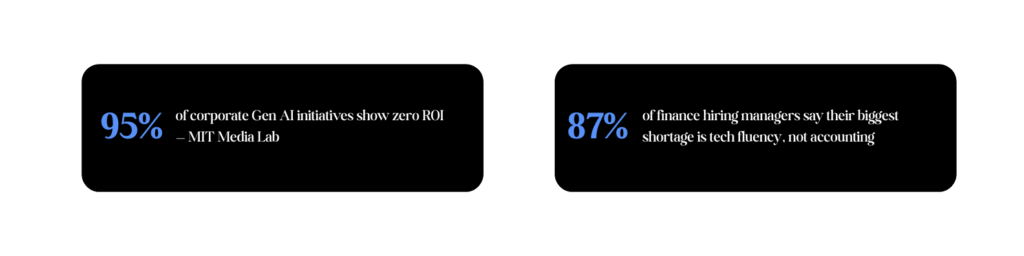
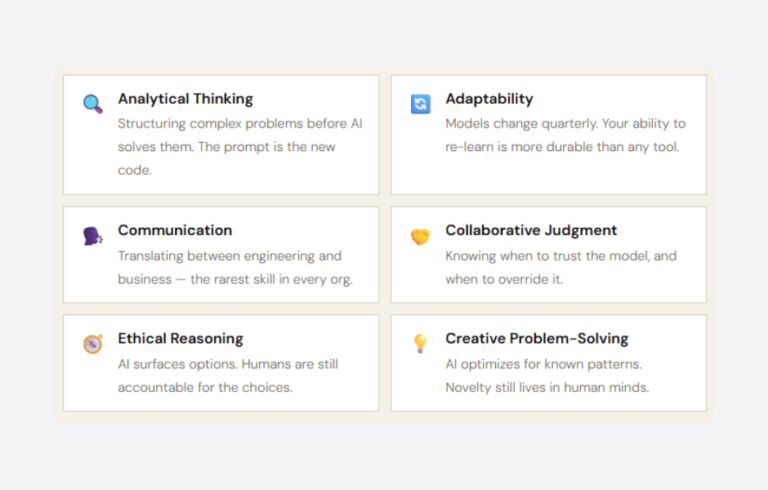
The 5% of AI initiatives that did deliver results weren’t just technically sound. They were led by people who could communicate across disciplines, adapt mid-flight, and build trust in ambiguous conditions. That’s not a tech skill. That’s a human one.
These aren’t “nice-to-haves.” They are the evaluation criteria of the near future. Organizations that used to screen candidates on technical certifications are beginning to design assessments around situational judgment, ambiguity tolerance, and cross-functional influence.
The World Economic Forum’s Future of Jobs Report 2025 ranks analytical thinking and adaptability as the top two skills employers will prioritize through 2030 above any specific technical competency. LinkedIn’s own data shows that job posts explicitly listing soft skills like “judgment,” “resilience,” and “cross-functional collaboration” have grown over 40% since 2022.
Hiring processes are already changing. Structured behavioral interviews, scenario-based assessments, and even AI-simulated work challenges are being used to evaluate how candidates think and respond not just what they know. The days of credentials-as-proof are numbered.
The techno-functional era isn’t just about learning new tools.
It’s about proving you can be trusted to use them well.
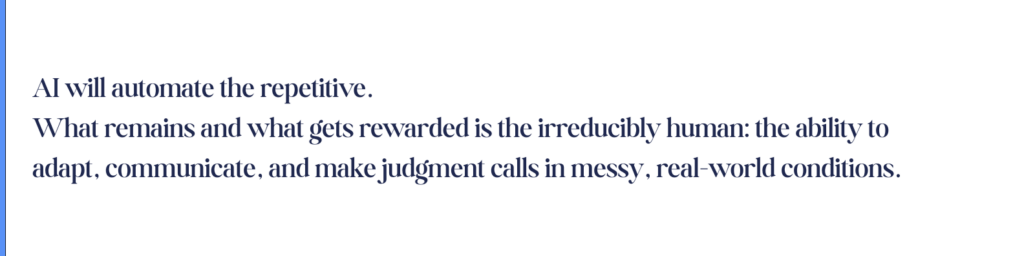
And trust is the most human thing there is.